When Google address autocomplete stops working on your checkout, the cause is most often the Google API key or the Google Cloud project behind it: the key isn’t allowed on your site, an API it needs isn’t enabled, billing isn’t set up, or CheckoutWC is set to a Places API version your project can’t use. This guide shows you how to find which one, and how to fix it.
What it looks like when autocomplete isn’t working
If your store uses Places API (Legacy) and there’s a problem with your Google API key, you will see something like this on your checkout page:
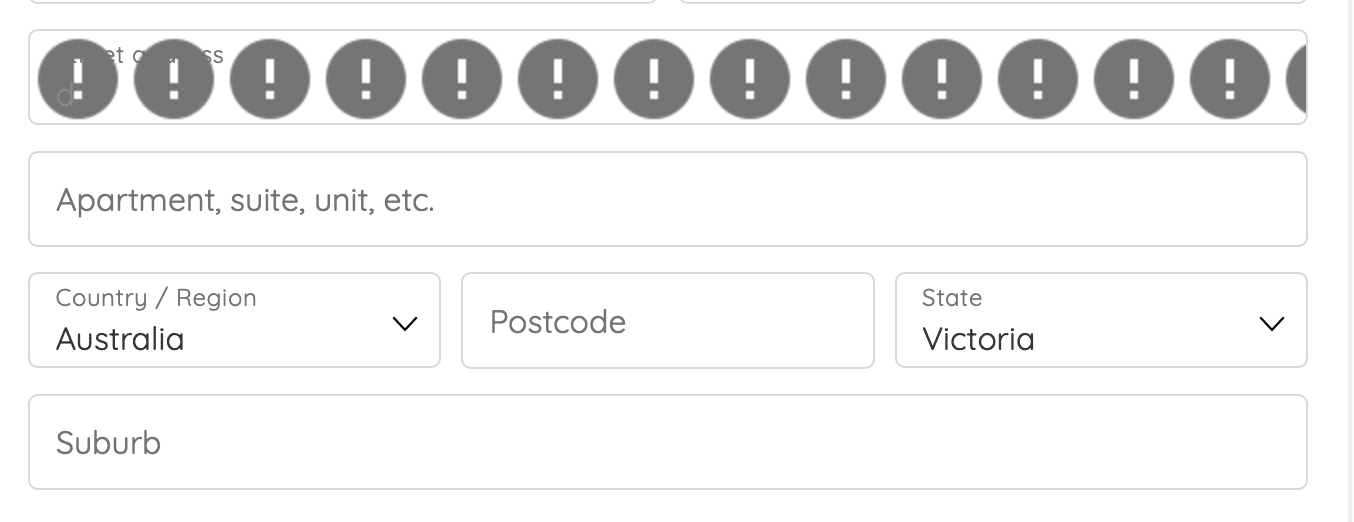
If your store uses Places API (New), the address field looks normal, but no suggestions appear when you start typing an address.
Step 1: Test your key with Check Key
Go to WP Admin » CheckoutWC » Integrations and click Check Key in the Google API section. It tests your key from your browser, the same way your checkout uses it, and tells you:
- whether Google refused the key for your site;
- which of Places API (New), Places API (Legacy) and the Geocoding API (used by the thank you page map) the key can reach;
- whether the Google Places API Version you have selected is one your project supports, and what to change if it isn’t;
- anything in CheckoutWC that stops autocomplete running: Google address autocomplete switched off, Separate Address Fields switched on, or Fetchify address autocomplete switched on at the same time.
You can check a key before you save it. If you change the key after a check, refresh the page before checking again, because Google Maps can only load one key per page.
Step 2: Read Google’s error in the browser console
To see Google’s own explanation, open up your browser’s developer tools on your checkout page and check the console for a log entry like this:

The error name tells you what to fix:
- RefererNotAllowedMapError: your store’s URL isn’t in the key’s list of allowed websites. The error shows the URL that needs to be allowed.
- ApiNotActivatedMapError: the Maps JavaScript API isn’t enabled on your Google Cloud project.
- BillingNotEnabledMapError: your Google Cloud project doesn’t have billing enabled.
- InvalidKeyMapError: Google can’t find the key, usually because it was copied incompletely.
- ApiTargetBlockedMapError: the key’s API restrictions don’t include an API CheckoutWC needs.
On Places API (New), CheckoutWC also logs “Google Places API (New) request failed” in the console when Google refuses a suggestion request. That usually means Places API (New) isn’t enabled on the project, or isn’t in the key’s list of allowed APIs.
Common causes and how to fix them
- The API key is not allowed on the current site (RefererNotAllowedMapError). Add your store’s domain to the key’s website restrictions in the Google Cloud console.
- The API key doesn’t have access to the necessary APIs. If you restricted the key to certain APIs, include the Maps JavaScript API, the Places API your store uses (Places API (New), or Places API for a store still on the legacy version) and, if you use the thank you page map, the Geocoding API.
- The project doesn’t have access to the necessary APIs. Enable the Maps JavaScript API and the Places API your store uses on the Google Cloud project itself, and, if you use the thank you page map, the Geocoding API.
- Your Google Cloud Project doesn’t have billing enabled.
- The Google Places API Version doesn’t match your project. Google closed Places API (Legacy) to projects created after 1 March 2025, so on a newer project only Places API (New) works: set Google Places API Version on WP Admin » CheckoutWC » Integrations to Places API (New). If you choose Places API (New), make sure it is enabled on your project.
- Separate Address Fields is switched on. It turns Google address autocomplete off; see Google address autocomplete and separate house number and street name fields.
- You’re using a plugin like PerfMatters and have it configured to block Google Maps for performance reasons. Check Key runs in your admin, not on your checkout, so it can pass while a plugin like this blocks Google Maps on the checkout page itself.
Setting up a key for the first time? See How to get and configure your Google API key and How to enable address autocomplete.